


The Best Sourdough Scoring Techniques for Beautiful Artisan Bread (Beginner to Advanced)
There’s something magical about pulling a fresh loaf of sourdough from the oven. The crackling crust, the incredible aroma, and that exciting first glimpse of how your loaf opened up never gets old.
We’ve been baking sourdough for years, and one of our favorite parts has always been the scoring.
We recently learned some simple techniques and small adjustments from JustDabbl.com that made an enormous difference. Honestly,we don’t remember our loaves ever coming out this beautiful! It’s amazing how just a few little changes can completely transform the finished loaf.
What fascinates us most is that two people can use the exact same sourdough recipe, yet one loaf looks like it came straight from an artisan bakery while the other…well, at least it still tastes delicious!
The difference often comes down to one thing:
Scoring.
Why Sourdough Scoring Matters
Beautiful scoring isn’t just decorative.
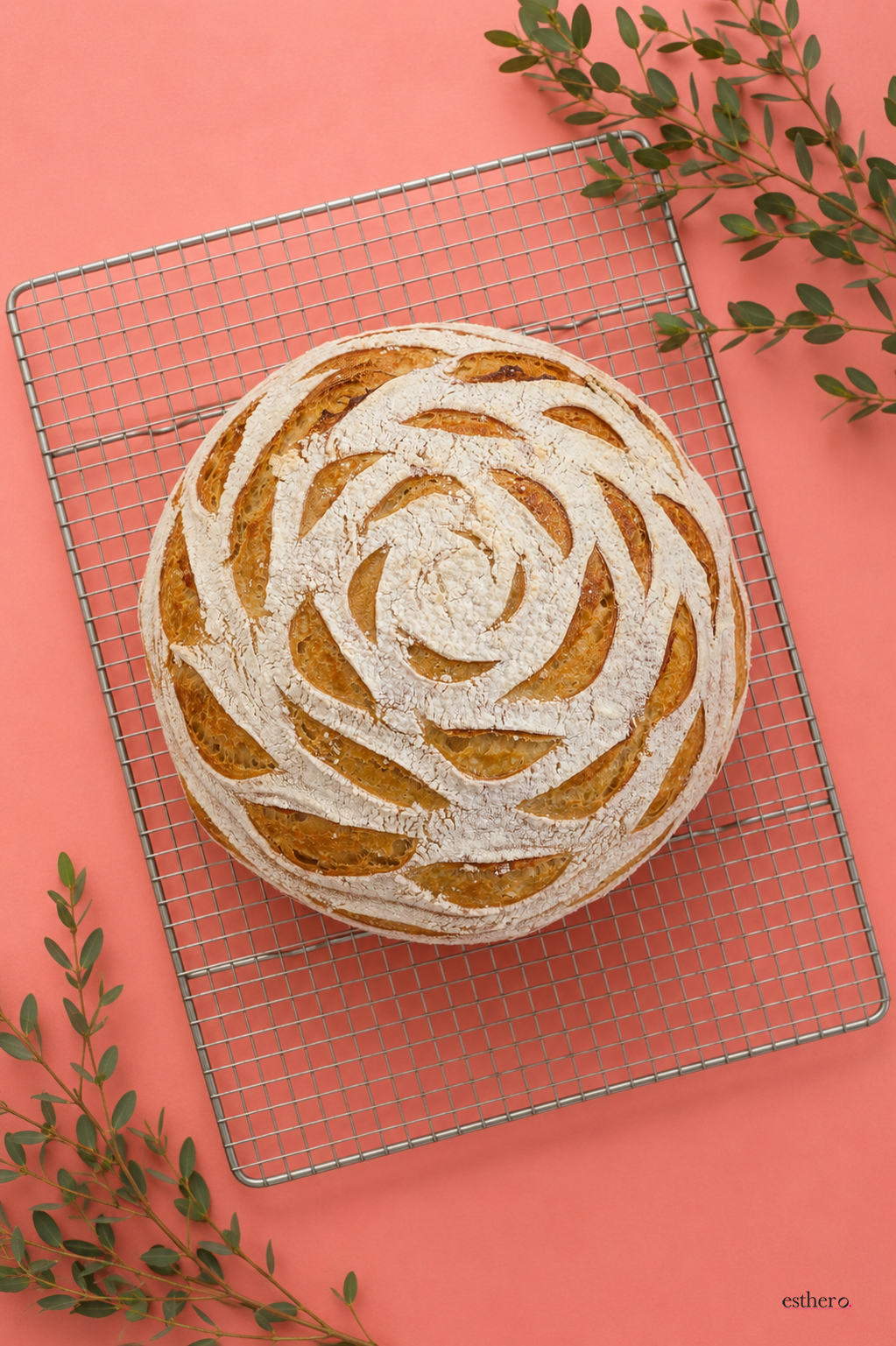
Those carefully placed cuts control how your dough expands in the oven. Proper scoring helps create:
- Better oven spring
- Taller loaves
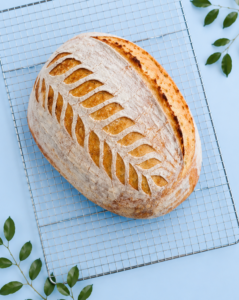
- Beautiful artisan ears
- Dramatic blooms
- Crisp, defined decorative designs
The best part?
You don’t have to be an artist.
A handful of simple techniques can make an incredible difference. Whether you’re hoping for a classic artisan ear or elegant decorative patterns, a little practice goes a long way.
Below you’ll find the techniques and tips that will help elevate my your sourdough baking.
Tips for Clean, Beautiful Sourdough Scoring
1. Prepare Your Loaf Before Scoring by Dusting it with Rice Flour
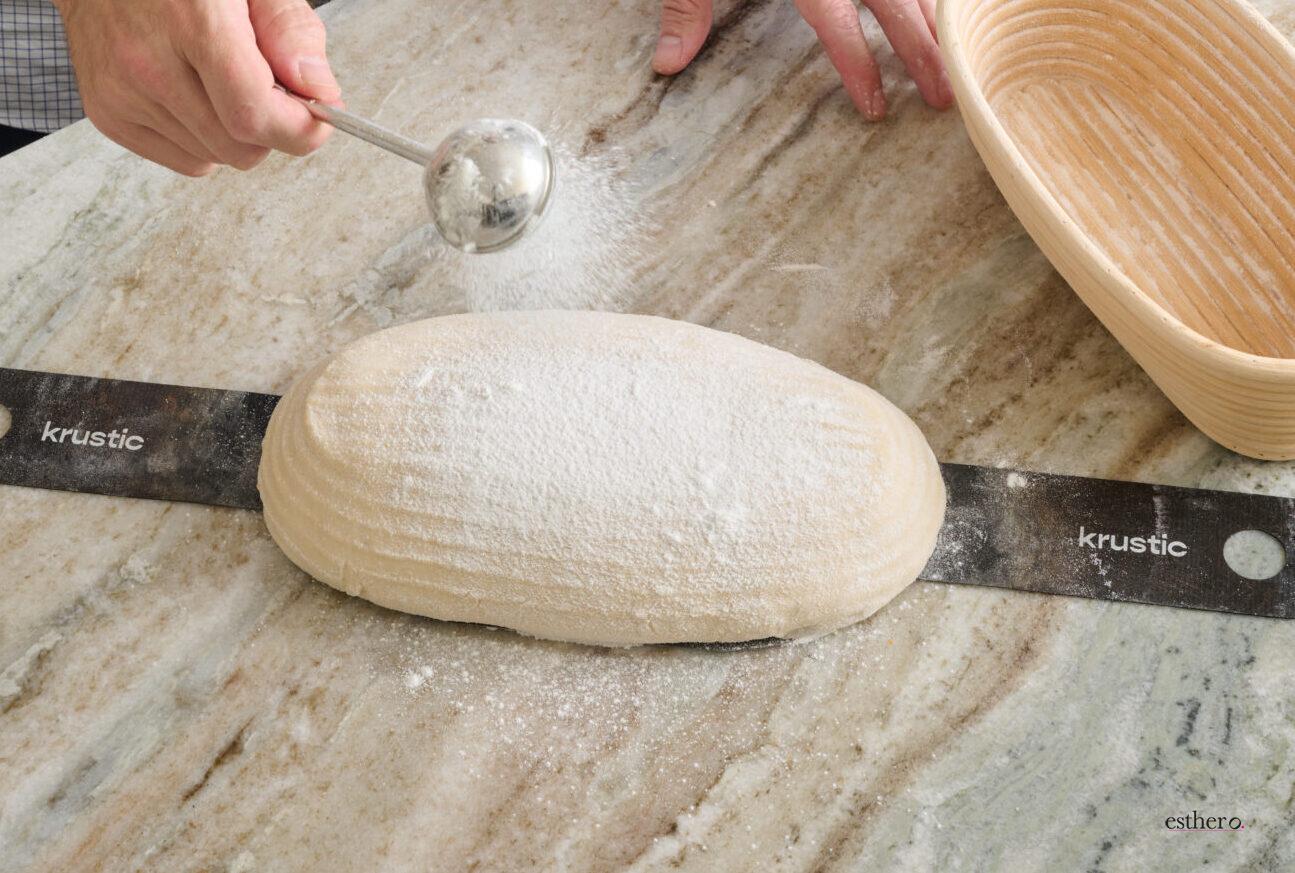
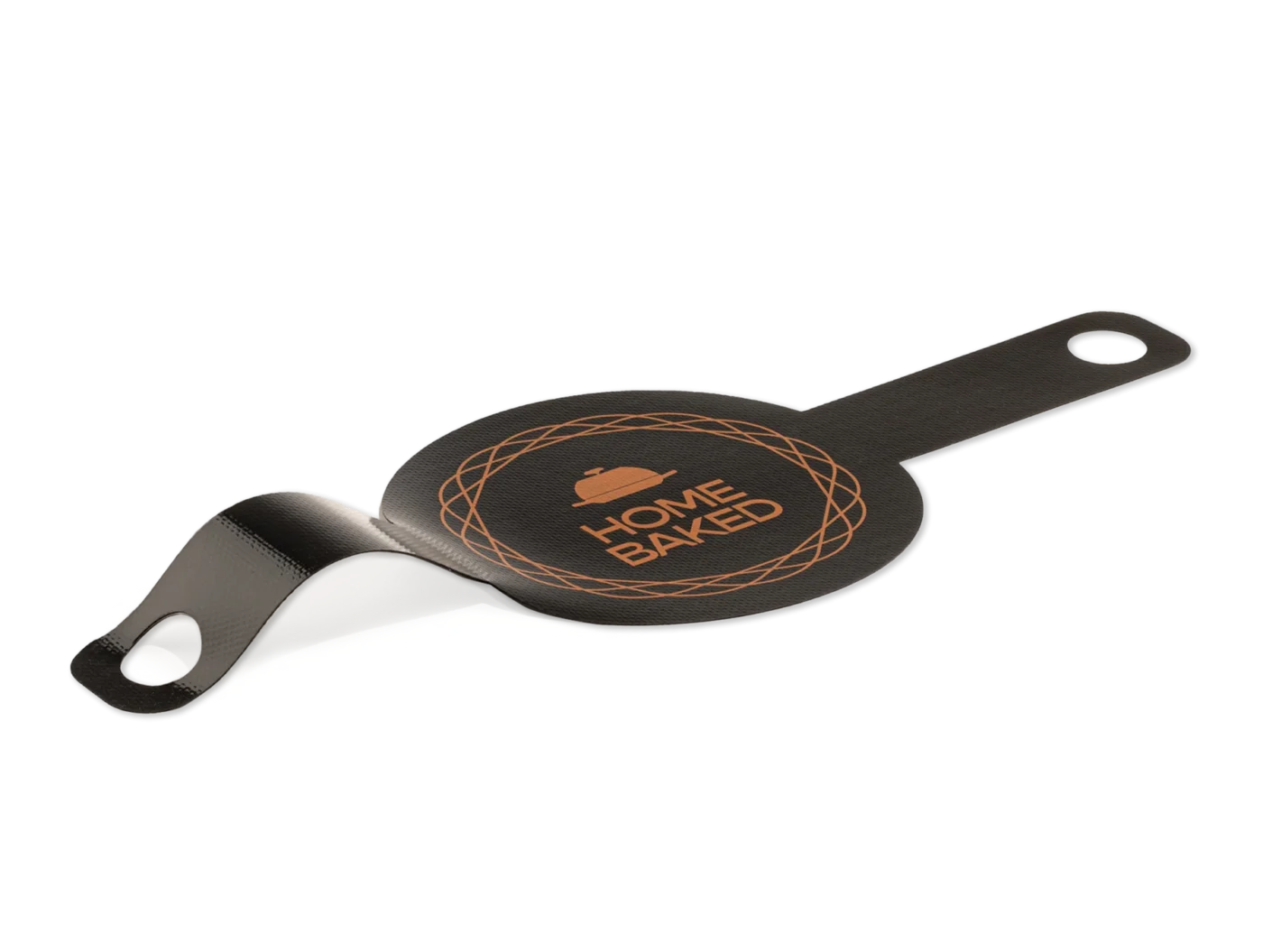
Once your dough has finished proofing, gently turn it out of the banneton onto parchment paper or a silicone bread sling.
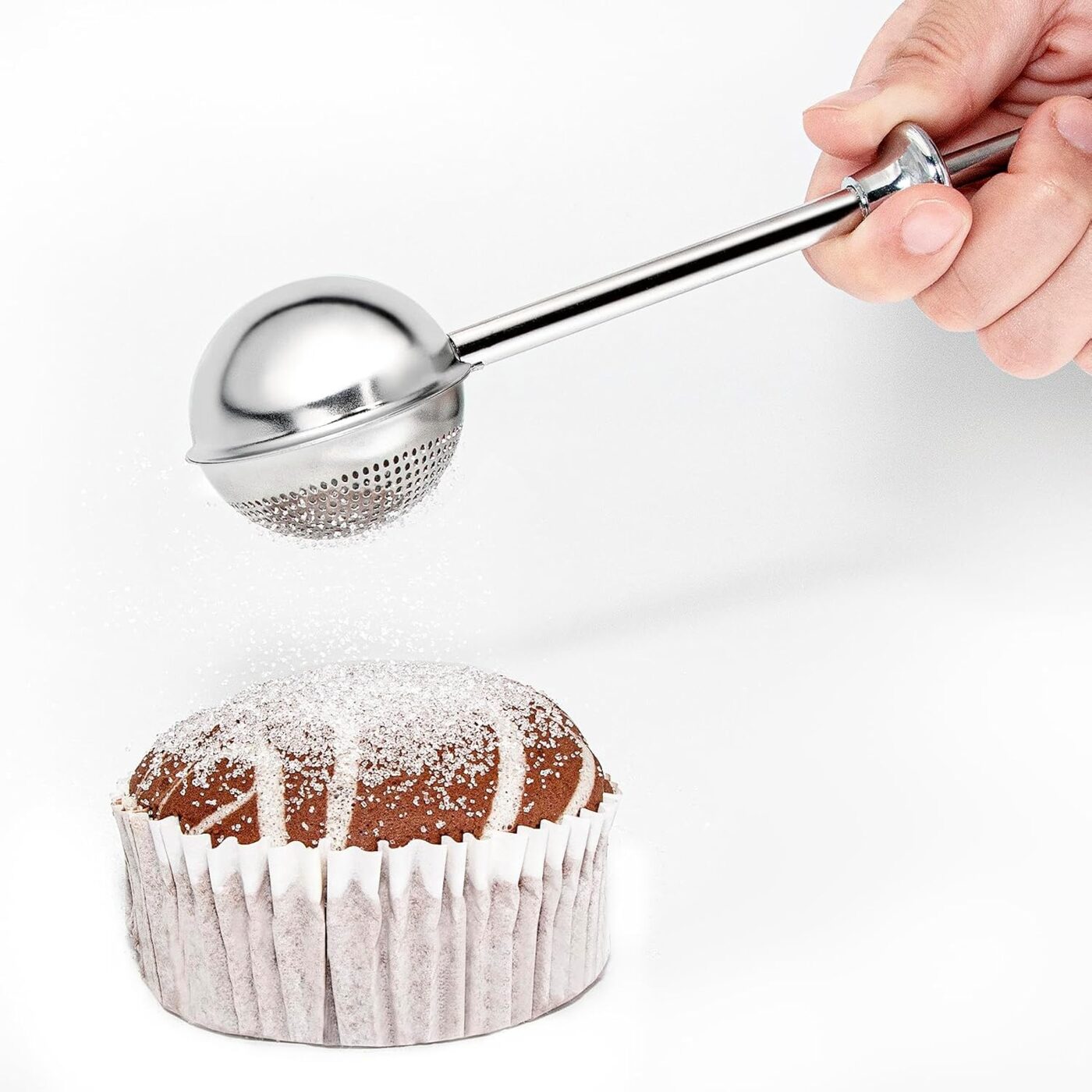
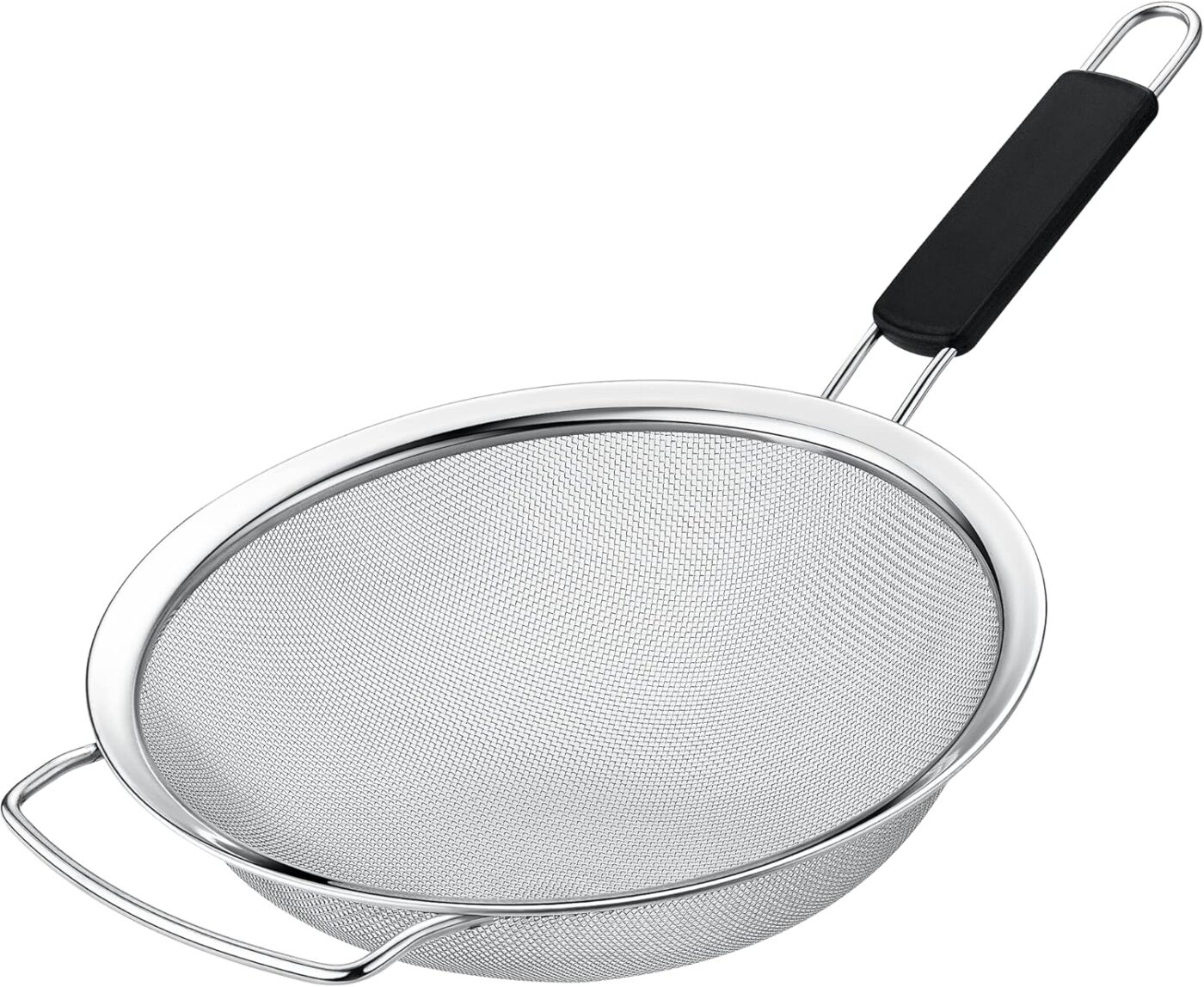
Dust generously with white rice flour using either:
One of the simplest tricks for creating crisp, high-contrast scoring is using white rice flour instead of wheat flour.
Rice flour doesn’t brown nearly as much during baking, so your decorative cuts stay bright and beautifully defined.
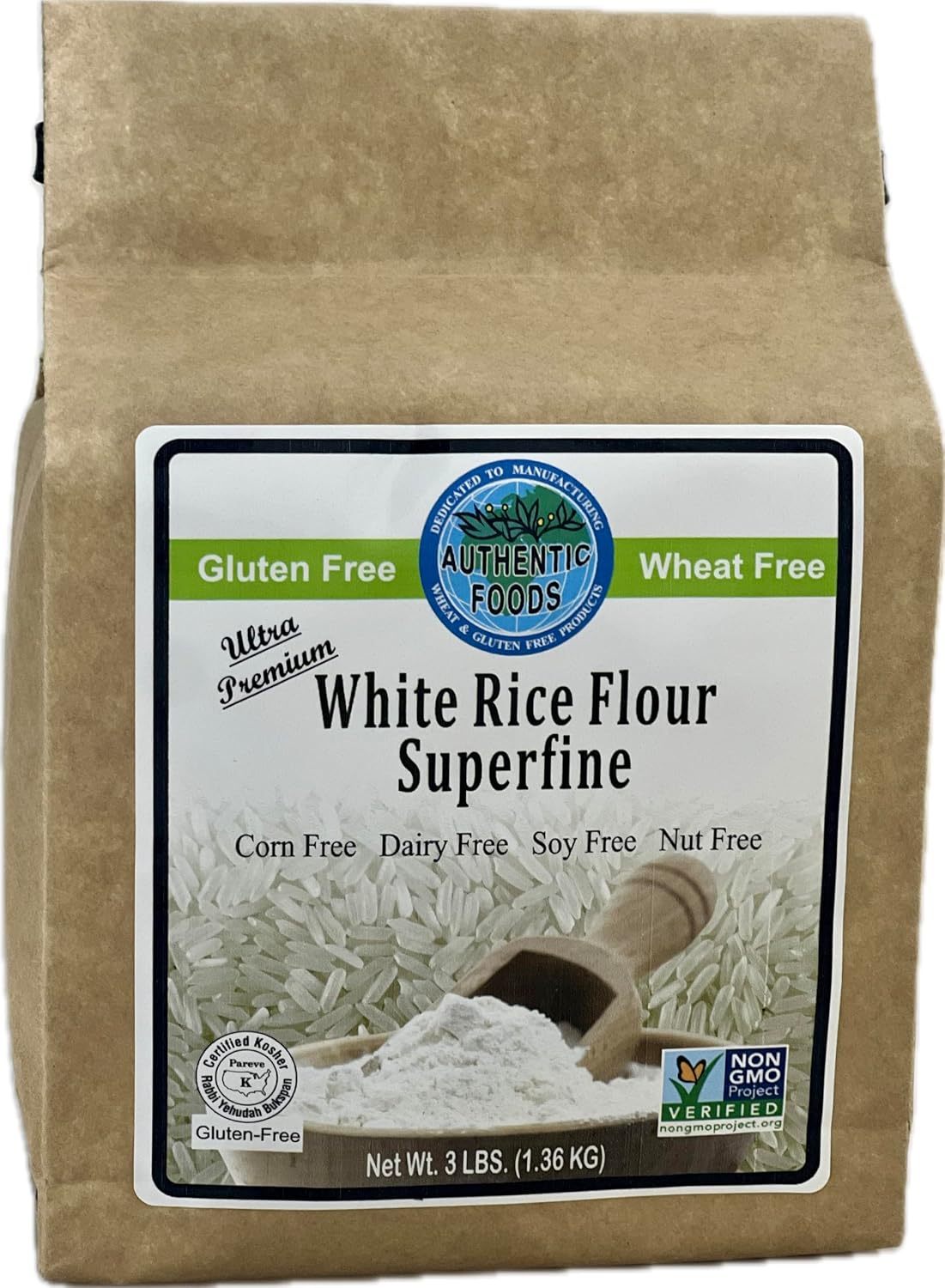
Regular grocery store rice flour works perfectly well, but our favorite is Authentic Foods Superfine Rice Flour. Its fine texture coats the dough evenly and produces especially clean-looking designs.
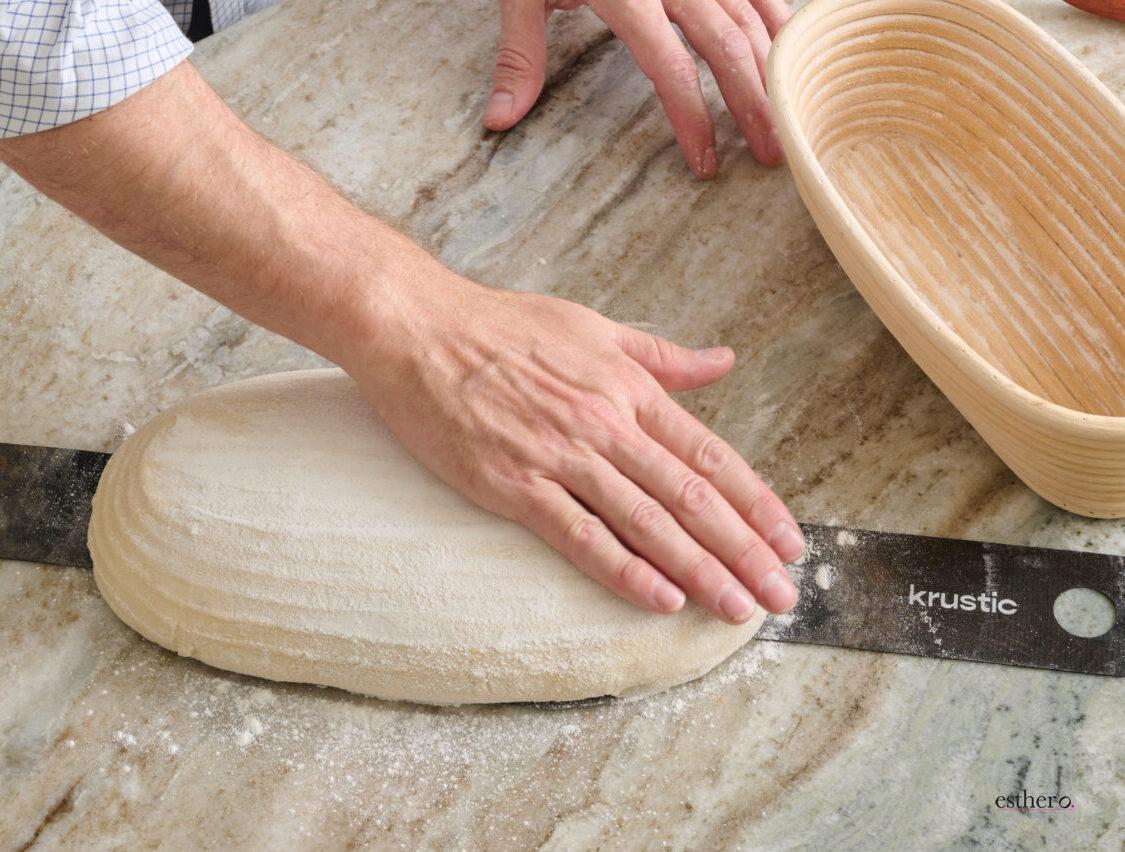
Once you’ve dusted your loaf, gently smooth the flour with your hand to remove any excess while leaving an even coating behind.
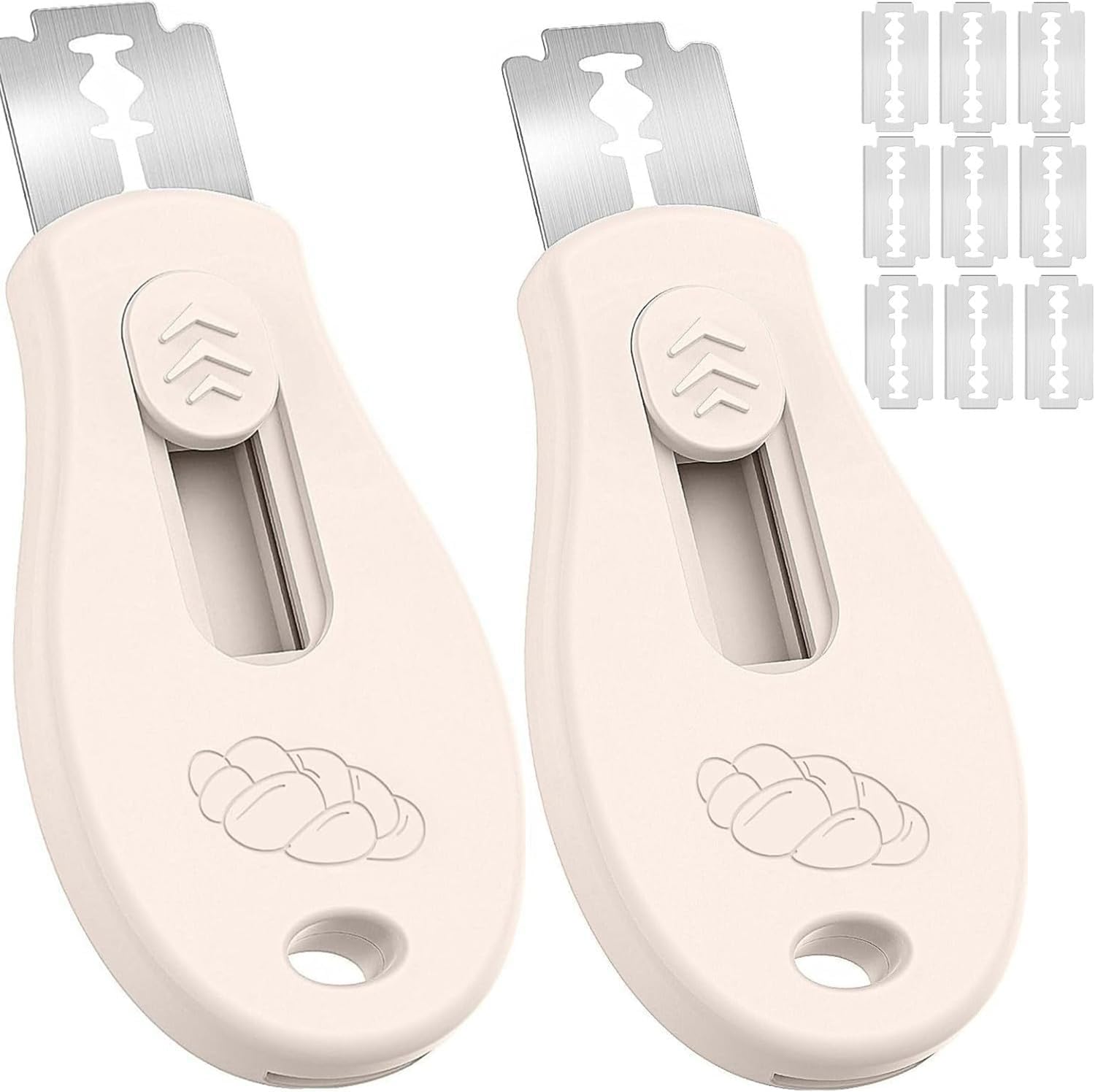
2. Use a Sharp Bread Lame
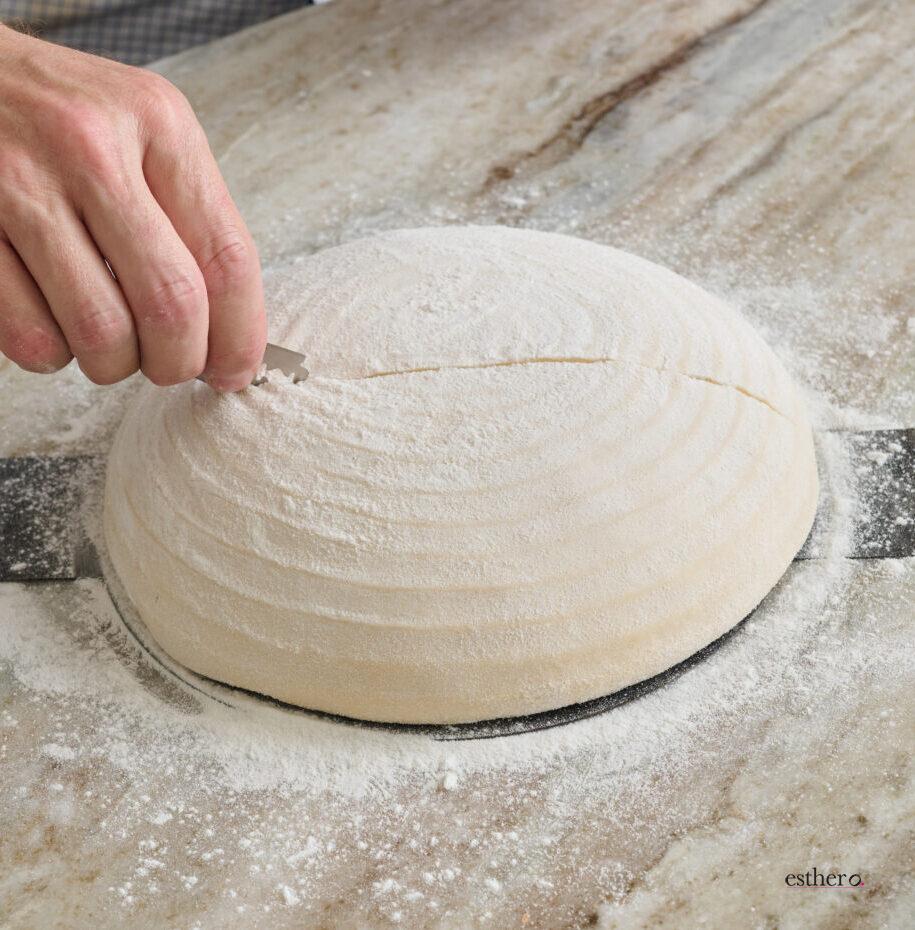
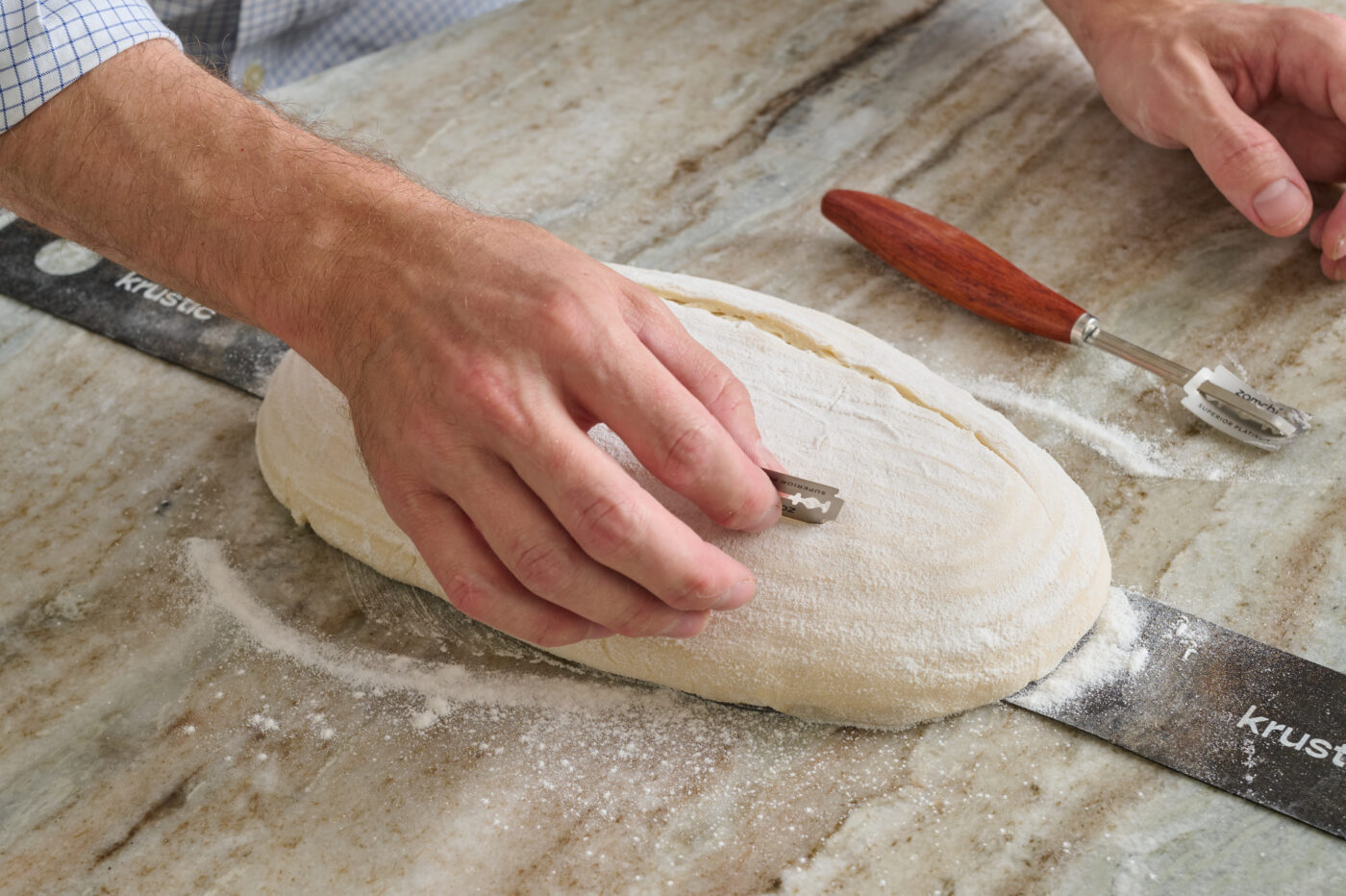
A bread lame (pronounced lahm) is specifically designed to hold a razor blade for scoring bread.
Some experienced bakers use a bare razor blade for maximum precision, but a lame is much safer and easier to control.
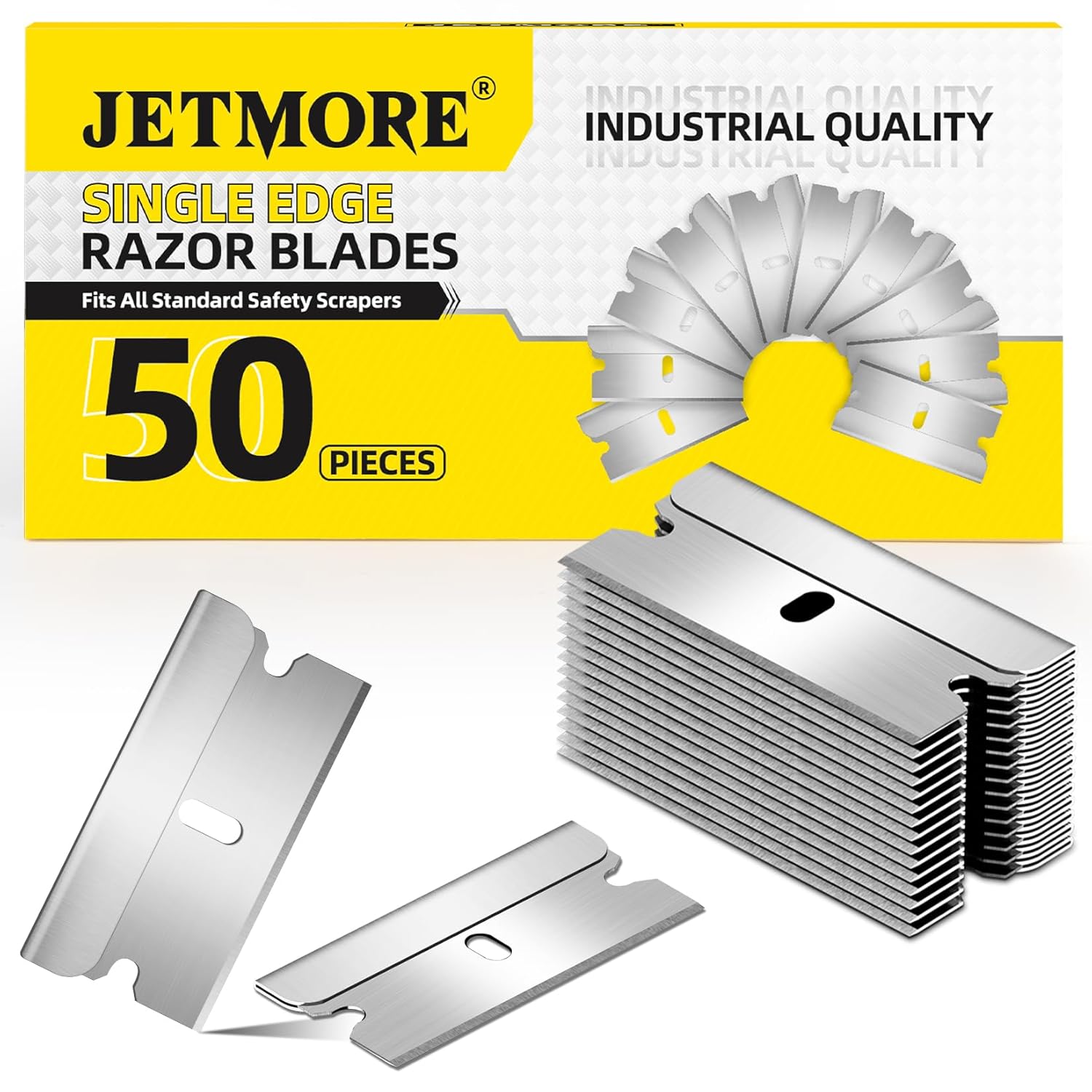
Fresh blades matter.
Replace your blade every 6–8 loaves, or sooner if it begins dragging through the dough.
A sharp blade glides effortlessly and creates much cleaner cuts.
3. Master the Blade Angle
The angle of your blade is just as important as the cut itself.
Instead of holding the blade straight down, keep it at about a 30–45° angle so it slides just beneath the surface of the dough.
This is what creates the beautiful lifted crust known as an artisan ear.
A few more tips:
- Pull the blade toward yourself.
- Use one smooth, confident motion.
- Use the tip of the blade whenever possible.
- Avoid sawing back and forth.
If the blade starts dragging, you’re probably cutting too deeply. It’s better to stop and continue the cut than to stretch the dough.
A Note on Dutch Ovens
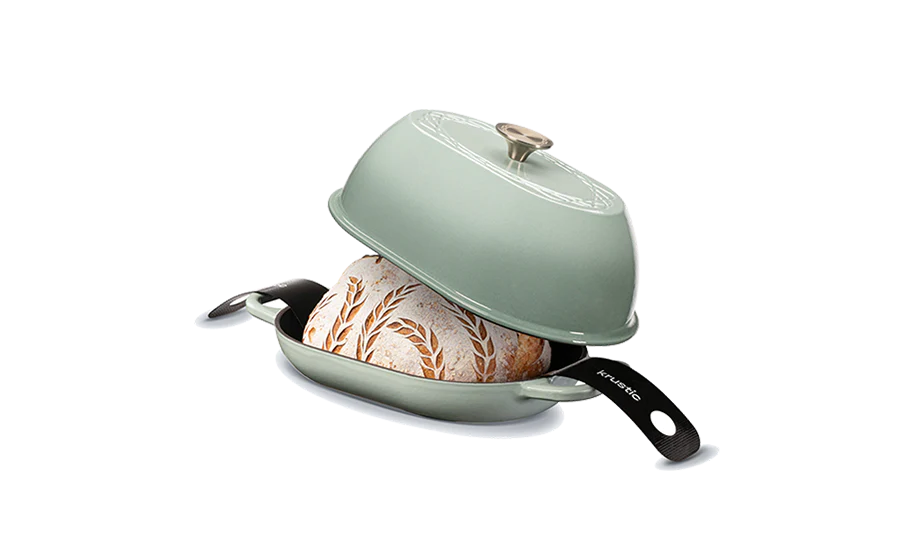
Using this Dutch oven makes the baking process much easier.
It’s essentially an upside-down Dutch oven — a shallow base with a deep lid instead of a deep pot with flat lid. It’s easier to score, easier to load the loaf, and produces an incredible crust.
Worth every penny. And they come in great colors!
Practice Makes Beautiful
If there’s one lesson we’ve learned, it’s this:
The prettiest sourdough loaves usually aren’t the ones with the fanciest scoring.
They’re the ones with the cleanest, most confident cuts.
Choose one design and bake it several times before moving on to another.
With every loaf, you’ll develop a better feel for:
- scoring depth
- blade angle
- dough tension
- how your dough opens in the oven
Before long, those cuts will become second nature.
Slow down, be creative, and make every loaf uniquely your own.
Don’t be afraid to experiment with different spacing, angles, and depths until you discover the style you love.
Every loaf teaches you something new—and even the imperfect ones are usually delicious.
So grab your lame, enjoy the process, and have fun creating beautiful artisan bread right in your own kitchen.
Once you’re confident with the basic scoring, check out our creative sourdough designs.