





How to Score a Classic Ear
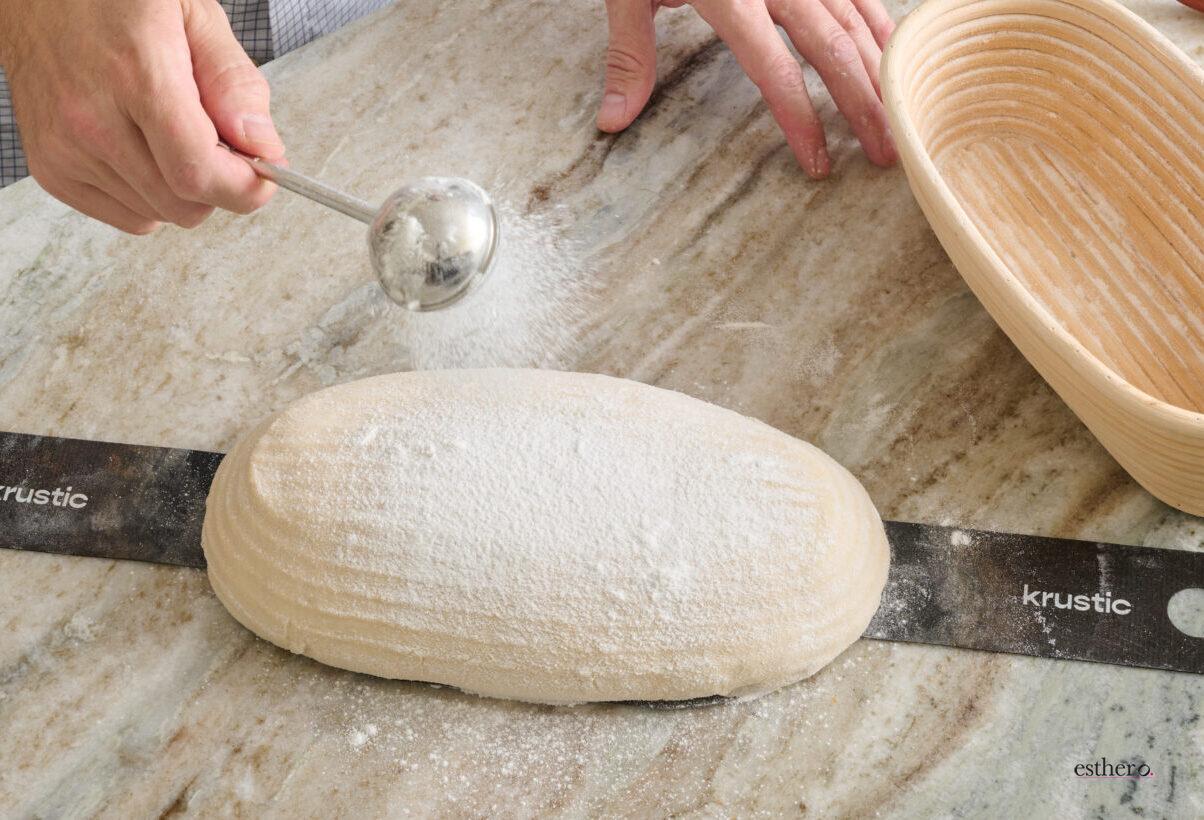
Step 1: Dust the Dough
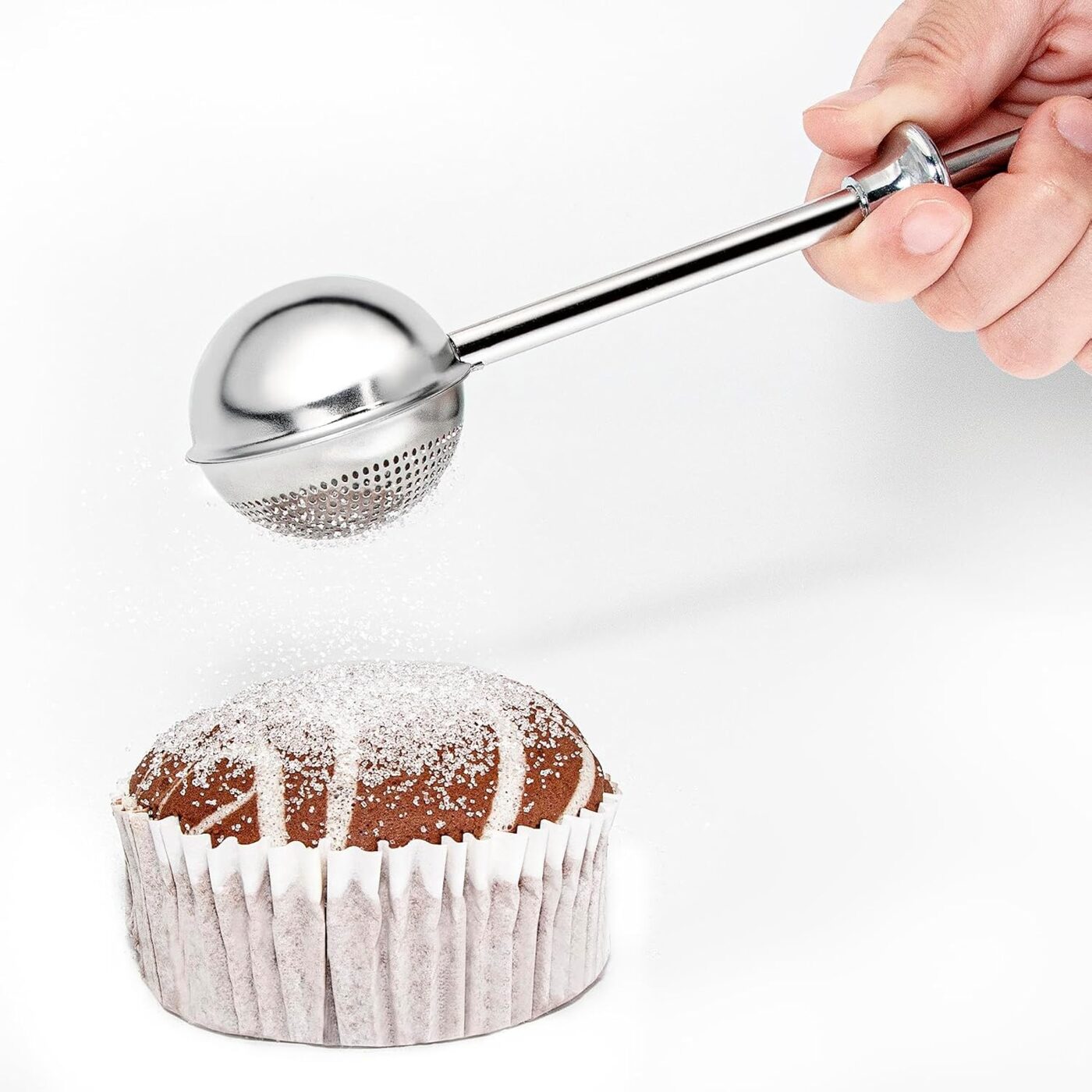
Lightly dust your proofed loaf with rice flour. Besides creating beautiful contrast after baking, the flour makes your scoring lines easier to see.
Step 2: Score the Ear
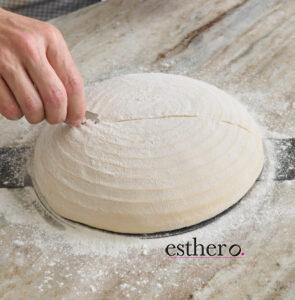
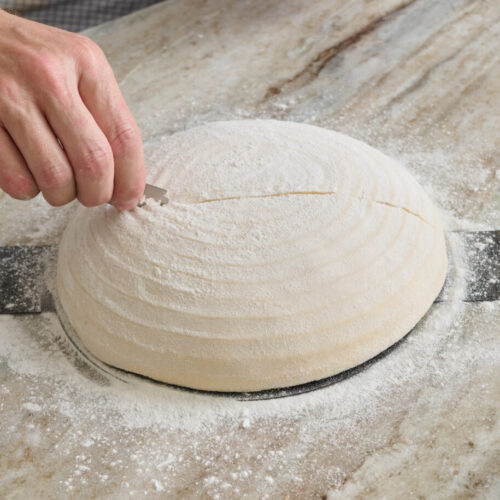
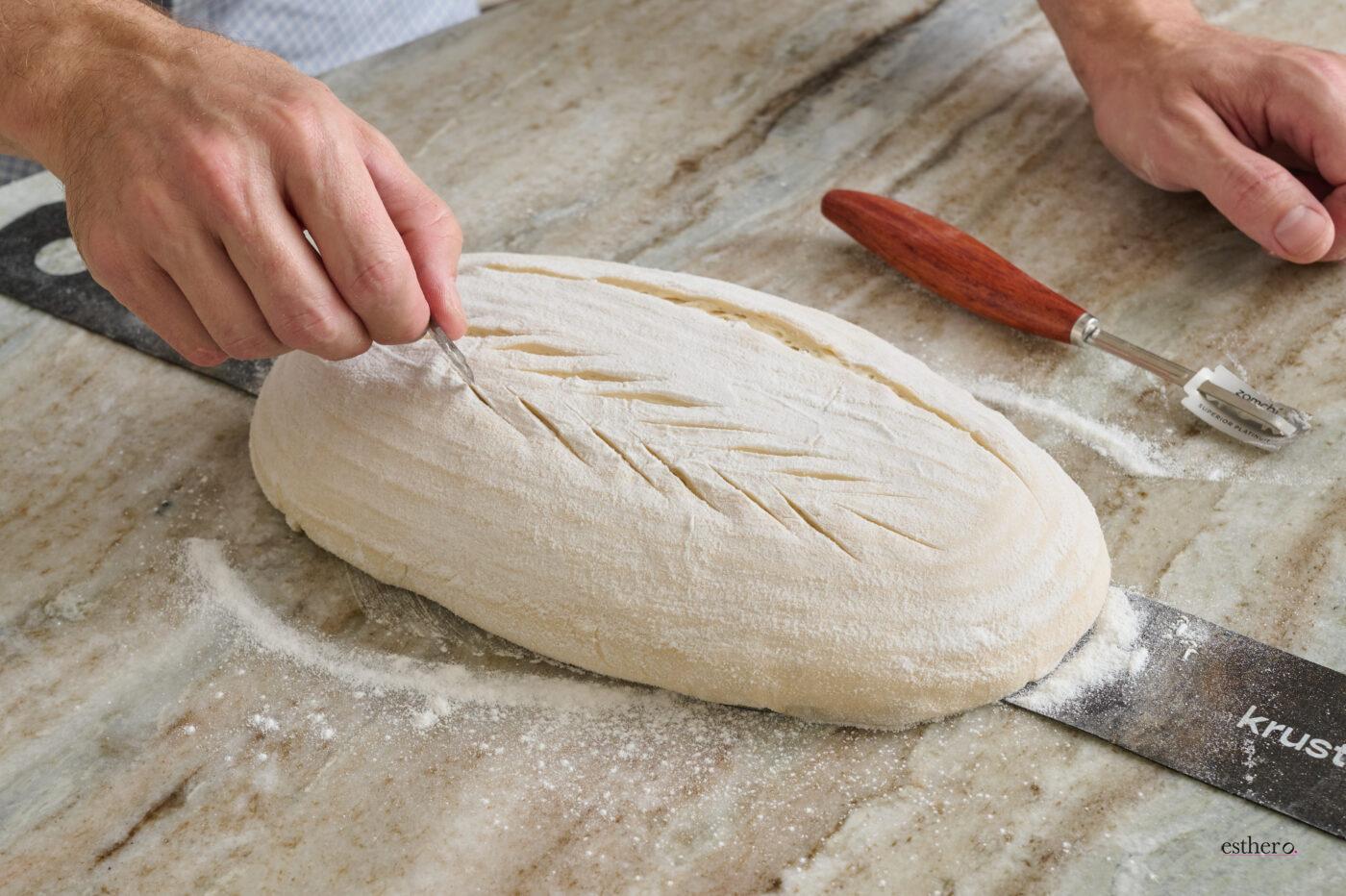
Hold your bread lame at about a 30–45° angle—don’t cut straight down.
Make one long, smooth cut about one-third of the way from the edge of the loaf. Use one confident, continuous motion rather than several short cuts.
This single score allows the bread to expand during baking while creating the beautiful raised ear every sourdough baker hopes for.
Step 3: Score the Wheat Stalk
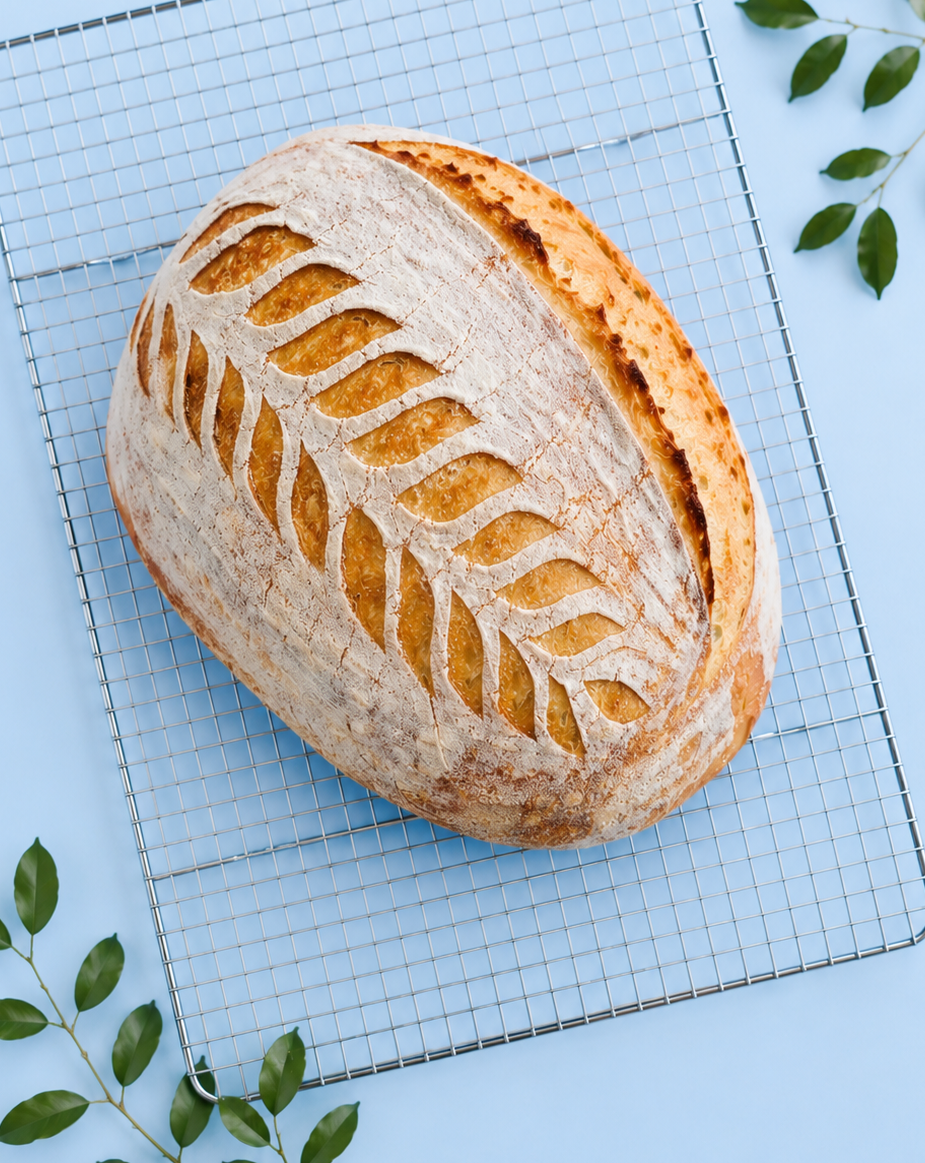
On the untouched side of your loaf, create the wheat design.
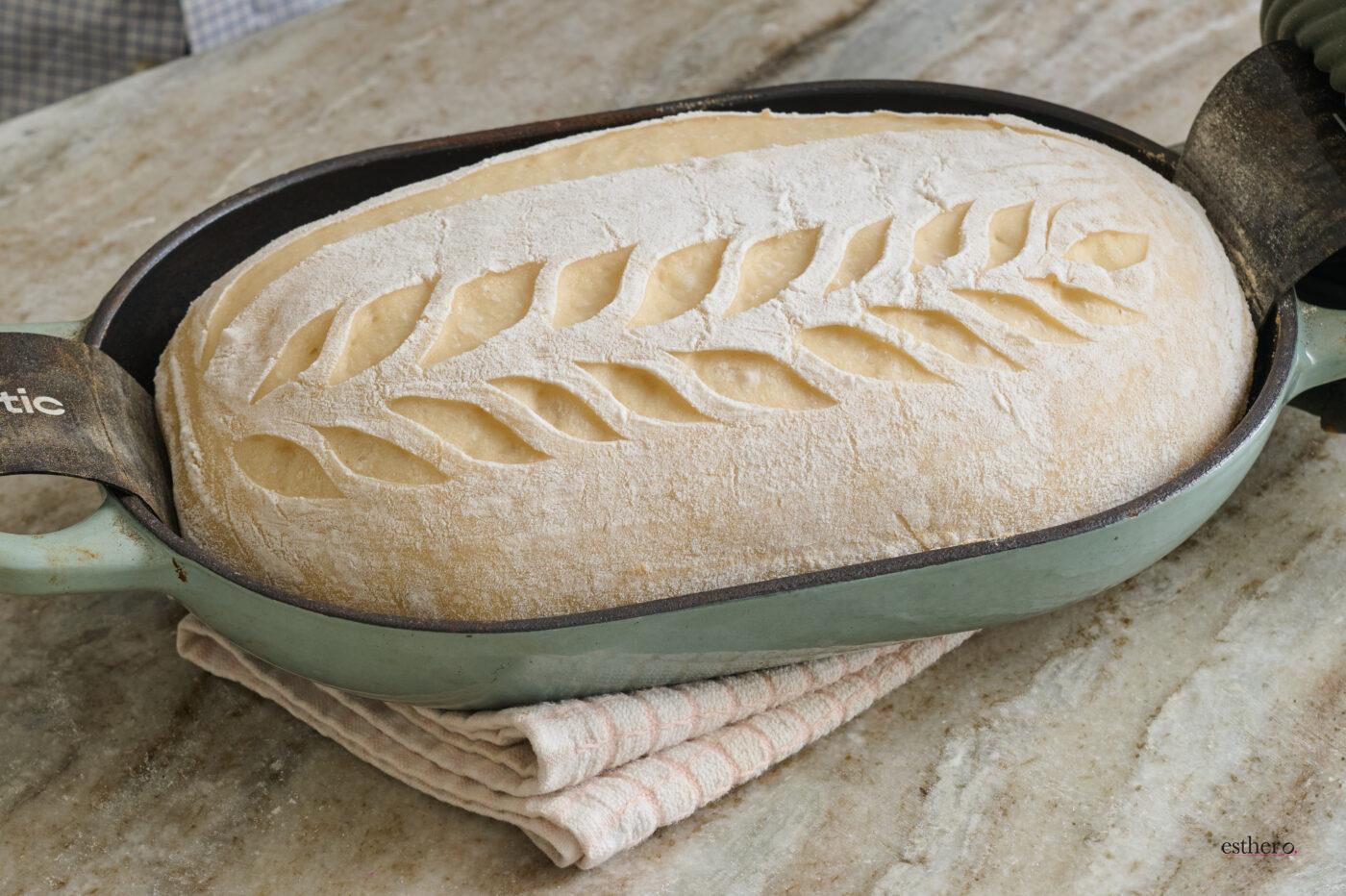
The wheat stalk is one of the first decorative scoring patterns many sourdough bakers learn because it’s simple, elegant, and incredibly forgiving.
It adds beautiful detail without affecting how the loaf expands.
The Secret Most People Don’t Know
The biggest mistake beginners make is cutting one long line down the center of the wheat stalk.
Don’t do it.
That center cut often opens unpredictably during baking and distracts from the finished design.
Instead, skip the center line completely.
Simply score the individual wheat branches using short angled cuts.
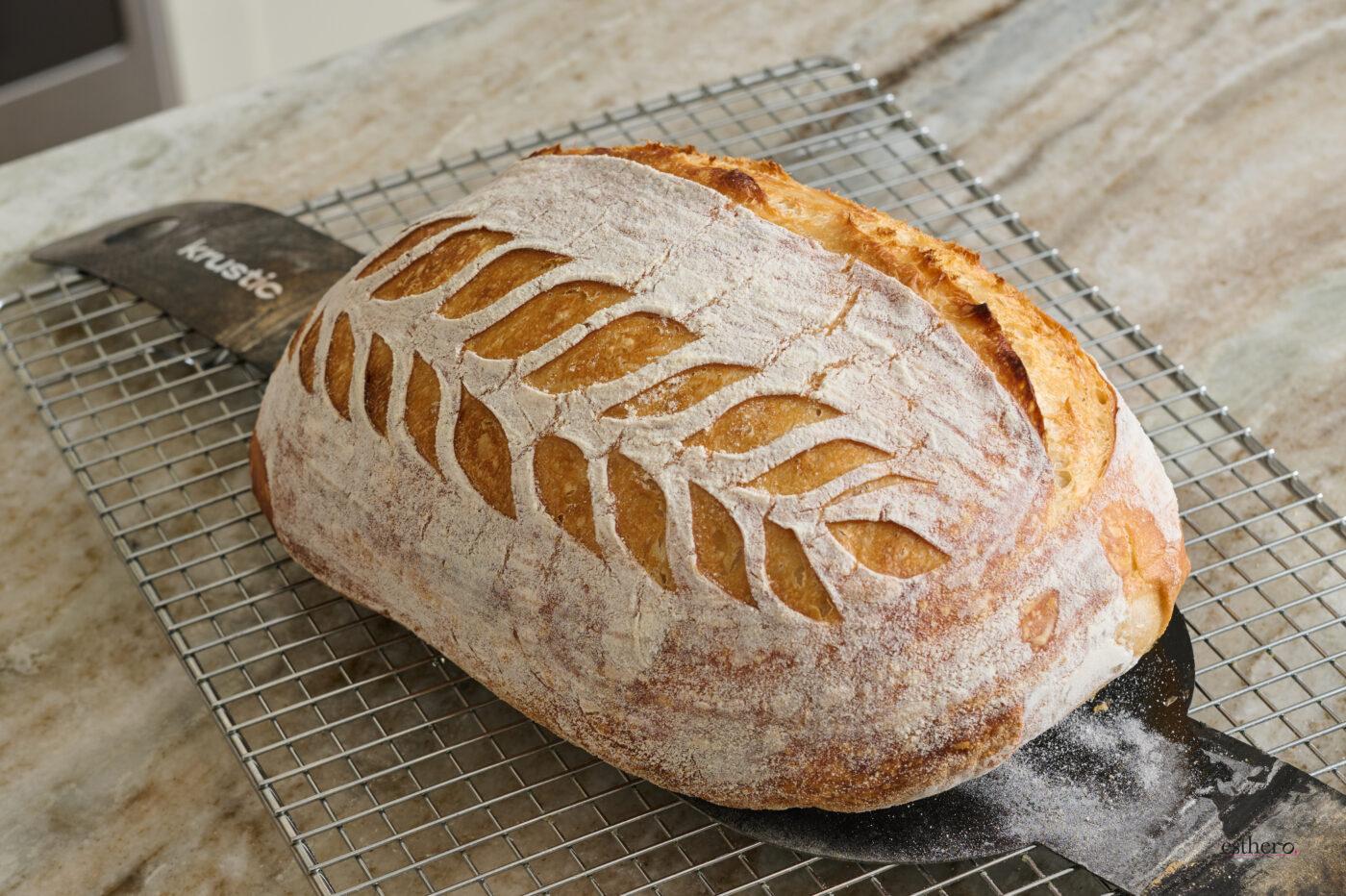
As the loaf bakes, those cuts naturally expand, creating the illusion of a complete wheat stalk with a much cleaner, more professional finish.
Step-by-Step Wheat Stalk Directions
- Begin near the top of the loaf.
- Make short diagonal cuts on one side of the imaginary center line.
- Each cut should be only about ½ millimeter deep—just slightly deeper than scratching the surface.
- Keep the cuts fairly close together.
- After finishing one side, return to the top and score the opposite side.
- Your wheat can grow in a perfectly straight line or gently curve across the loaf for a more natural appearance.
Take your time. Small, even cuts almost always produce the prettiest finished loaf.
Pro Tip: Get an Extra Crispy Ear
Want an even taller, crispier ear?
About 7–8 minutes into baking, carefully remove the loaf from the oven. By this point, your original score will have begun opening.
Instead of cutting through the center again, hold your lame at the same shallow angle and gently score along the upper edge of the original cut, allowing the blade to slip underneath the ear.
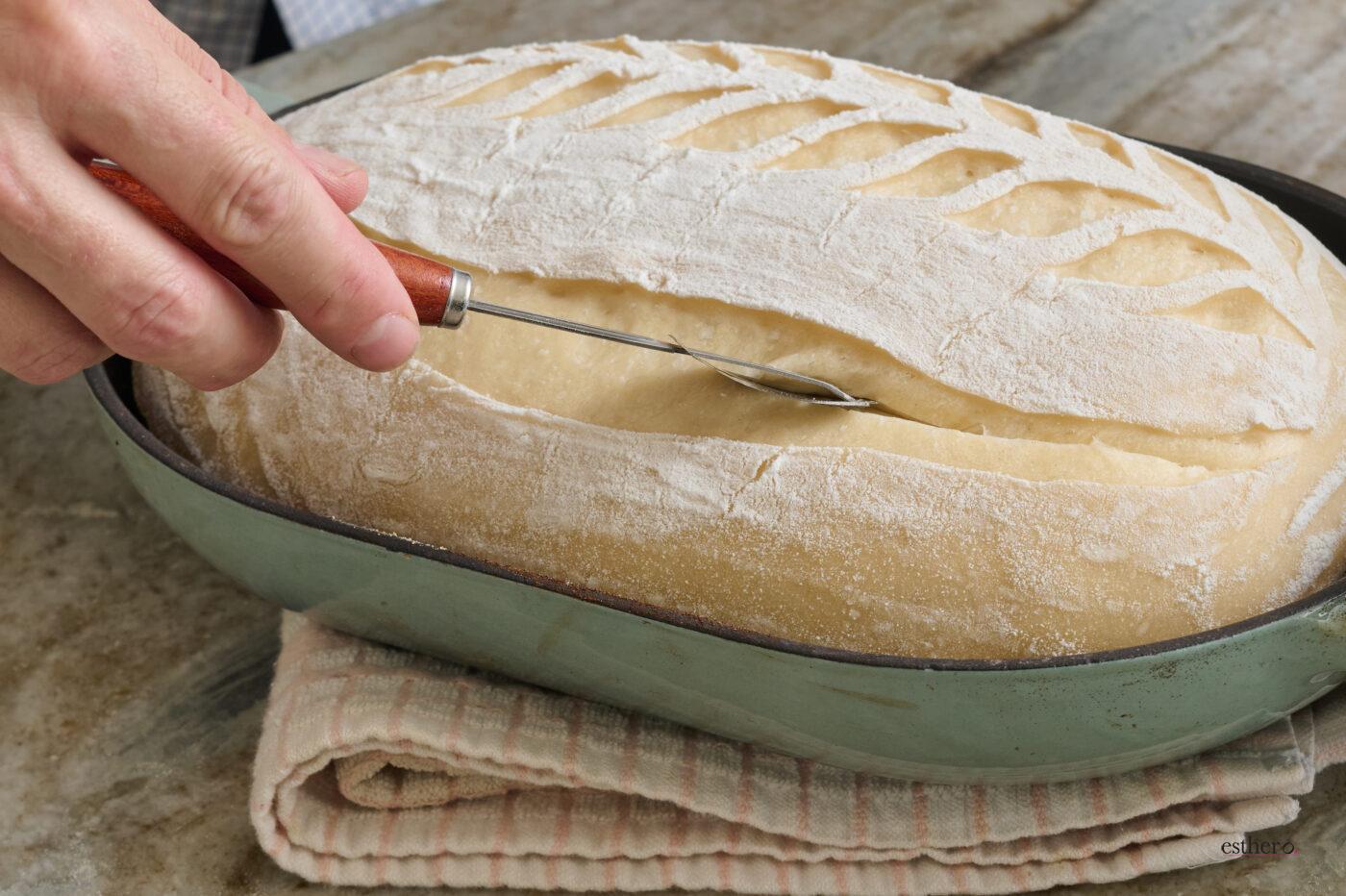
Return the loaf to the oven and continue baking.
This simple trick encourages the ear to curl upward even more, creating the dramatic artisan look that’s difficult to achieve with only a single score.
Tips for Success
- Dust generously with rice flour for maximum contrast.
- Always hold your lame at a shallow angle.
- Make quick, confident cuts.
- Resist the temptation to score a center line for the wheat.
- Practice this design several times before moving on to more advanced patterns.
Frequently Asked Questions
What is the best flour for sourdough scoring?
White rice flour is the best choice because it stays bright during baking and creates crisp, high-contrast designs.
How deep should I score sourdough?
Decorative cuts are generally shallow, while the main expansion score should usually be about ¼–½ inch deep, depending on your dough.
Why didn’t my sourdough get an ear?
The most common reasons are:
- The blade angle was too steep.
- The dough was overproofed.
- The score wasn’t deep enough.
- The dough lacked enough surface tension.
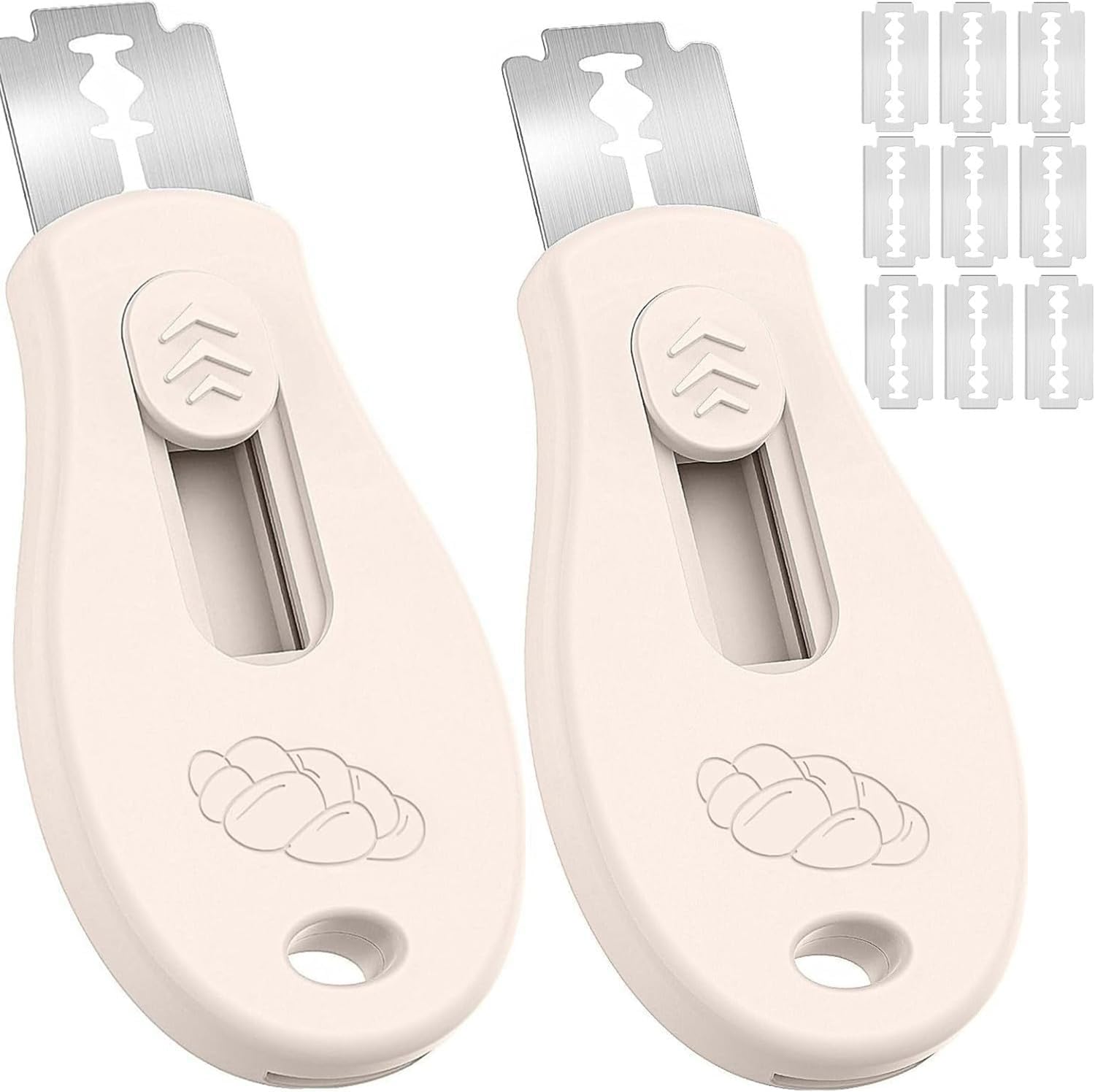
How often should I replace my bread lame blade?
For the cleanest cuts, replace the blade every 6–8 loaves, or sooner if it begins dragging.
Can beginners create decorative sourdough scoring?
Absolutely! Start with one simple pattern and practice it several times. You’ll be surprised how quickly your confidence—and your loaves—improve.
Photos by Hudi Greenberger